
Culture & Research
From cultural research to design decision.

Culture is not a repertoire of images to draw inspiration from. It is a tool for understanding why a product takes a certain form, what meanings it communicates, who it is addressed to and in what context it can exist.
From knowledge to matter
For those who design fashion, knowing a historical period, an artistic movement or a social transformation does not mean reproducing its aesthetic codes. It means recognizing the relationships between forms, behavior, materials, technologies and production systems. Research becomes useful when it allows you to formulate a more precise design question.
Fashion, after all, is not born only from individual intuition. It is a cultural and collective phenomenon: taste is formed in a social context, meanings are attached to objects, proposals are selected and transformed by designers, intermediaries and the people who adopt them. The decisive step is to connect this knowledge to matter: a cultural reference must be able to become a choice of proportion, construction, material, function or communication, and that choice has to be verified in the product.
The pages in this area
This area gathers six reading paths. They are not sections of a single story: they are different points of view on the same process, and it makes sense to cross them in any order.
Reading the past
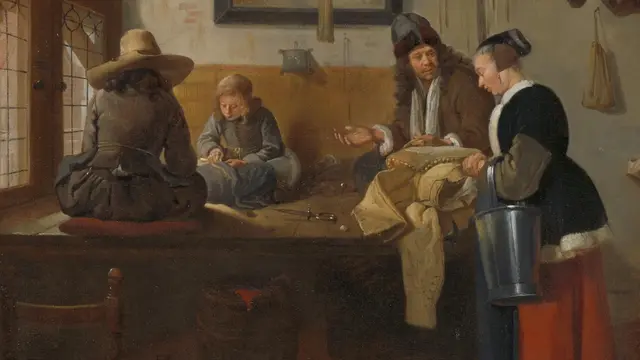 Fashion HistoryFrom the workshop to the global supply chain: how design, product and ways of making have changed, with the people and machines that changed the system.
 Art, Architecture and PhotographyWhat fashion has taken from, and given to, other visual languages: form, structure, light and the gaze.
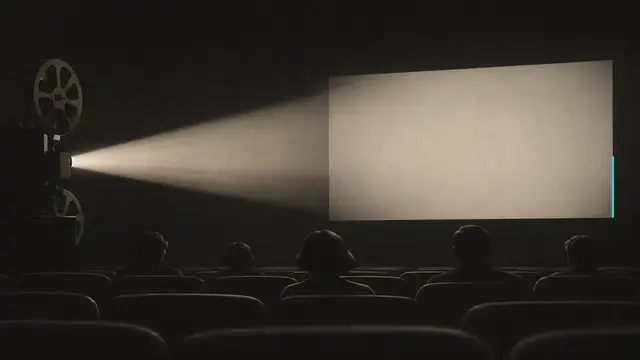 Cinema and Visual CultureCostume as design, the screen as a shop window, and how moving images have changed the way we see a garment.
Understanding the mechanisms
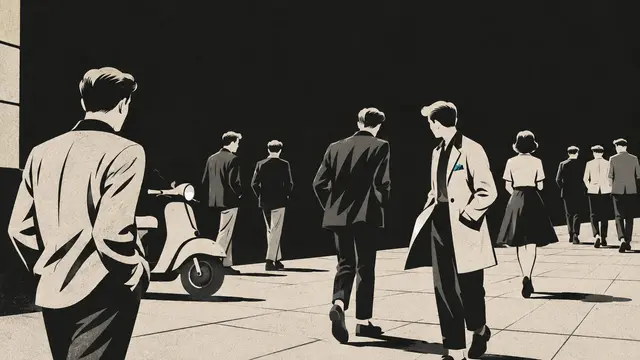 Phenomenology of StylesHow a style is born, spreads and transforms: from subcultures to the market, and what it means to read a style without copying it.
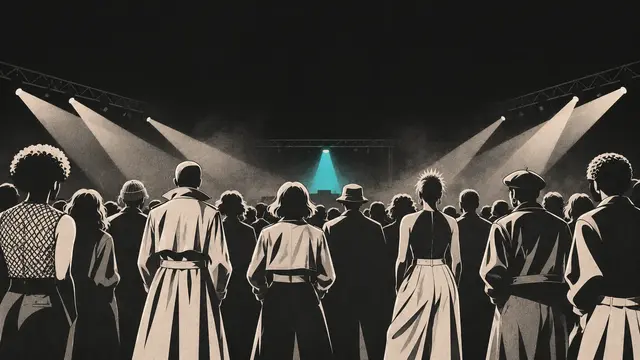 Music and FashionHow concerts, clubs, artists and technologies have transformed clothes, materials and design, from jazz to virtual environments.
 Thinking about FashionTheories and thinkers, from Simmel to Barthes, from Bourdieu to Munari, as tools for reading the context before designing.
A reference is not yet a project
An image, a film, a historical object or a piece of social behavior can catch the eye, but they do not automatically contain a design direction. The first job is to understand what makes a reference interesting: it can be a form, but also the way an object is used, the relationship with the body, a technique, a habit, a change in society.
Roland Barthes showed how clothing can also be read as a system of meanings: it communicates not only through its material presence, but through descriptions, images and shared codes. Pierre Bourdieu helps us understand how taste is tied to social and cultural conditions, and is not a completely individual preference. Grant McCracken and Herbert Blumer, each in their own way, show how meanings are transferred to objects and how proposals are collectively selected.
These readings do not supply an aesthetic formula. They serve to ask questions: what meaning does this reference carry? Who recognizes it? In what context does it have value? Is it still current, or does it belong to a cultural system that has changed?
The difference between research and decoration lies here. Citing an aesthetic without understanding its context produces a superficial resemblance; interpreting it lets you identify a principle that can be transformed.
Three cases: when culture meets design
Madeleine Vionnet: interpreting how matter behaves
In the early decades of the twentieth century Madeleine Vionnet’s maison developed a systematic use of the bias cut, working the fabric diagonally to the direction of the threads to obtain a more fluid drape and a different relationship between fabric and body. The references were the body in motion, classical statuary and the behavior of fabrics; the decision was to use the bias cut as a tool for building silhouette and movement. Form is not imposed on the material with a rigid structure: it can emerge from the properties of the fabric and from how it reacts to the body.
If this principle were translated today into a new product, stability, fabric consumption, distortion, fit, behavior after washing and repeatability of the pattern would need to be verified. This is a contemporary design application, not a reconstruction of the maison’s historical procedures; the value of the case is to show that cultural research can become a precise technical solution.
Giovanni Battista Giorgini: designing the system too
On 12 February 1951 Giovanni Battista Giorgini organized in Florence a collective presentation of Italian high fashion aimed at international buyers. The initiative connected different maisons and Italian manufacturing capacity with a foreign market, and helped build Italian fashion as a recognizable system. Later presentations were also held in the Sala Bianca of Palazzo Pitti. The context is in Fashion History.
The interpretation here is that the value of a production does not depend only on the quality of a single garment, but on the ability to make skills recognizable, organize the offer and build a relationship with the market. Product, manufacturing, territorial identity, presentation and distribution become parts of the same project. In a contemporary project, the consistency between product, supplier capacity, quantities, timing, quality and distribution must be checked before communicating a promise of identity or origin. This case widens the field: sometimes the most important decision does not concern a garment’s detail, but the way a collection is built and made possible.
Yves Saint Laurent Rive Gauche: interpreting a social change
In 1966 Yves Saint Laurent opened the Rive Gauche boutique in Paris, dedicated to an autonomous ready-to-wear line, treated with the same care given to couture but as a distinct system. The choice fitted a society in which a growing number of women were looking for elegant and accessible clothes beyond the traditional boundaries of high fashion.
Interpreting a social change can mean rethinking the whole organization of the offer: ready-to-wear was developed as a line with its own identity, not as a cheaper version of couture. A product meant for wider distribution has to be checked for fit, sizes, materials, costs, repeatability and availability.
A method you can apply
The method is organized in five steps. It is not a rigid sequence: verification can send you back to research, and a material test can change the initial interpretation. It is a structure consistent with Bruno Munari’s attention to the design process, experimentation and verification.
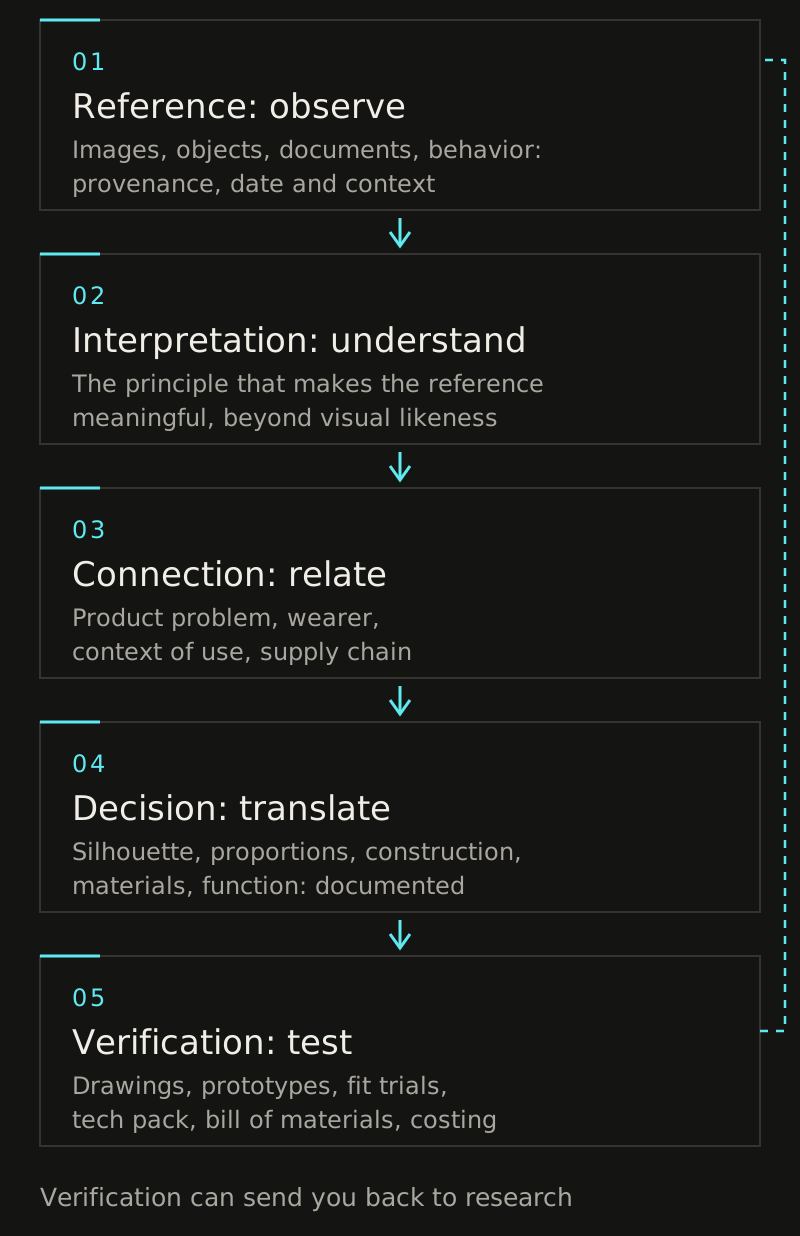
1. Reference: observe. Collect images, objects, documents, behavior and sources. Record provenance, date and context. Separate what is observed from what is assumed.
2. Interpretation: understand. Identify the principle that makes the reference meaningful: it may be social, formal, functional, technical or symbolic. Avoid stopping at visual likeness.
3. Connection: relate. Link the identified principle to the product problem, the wearer, the context of use and the possibilities of the supply chain.
4. Decision: translate. Define what must change concretely: silhouette, proportions, construction, materials, details, function or system of presentation. The decision must be describable and documented.
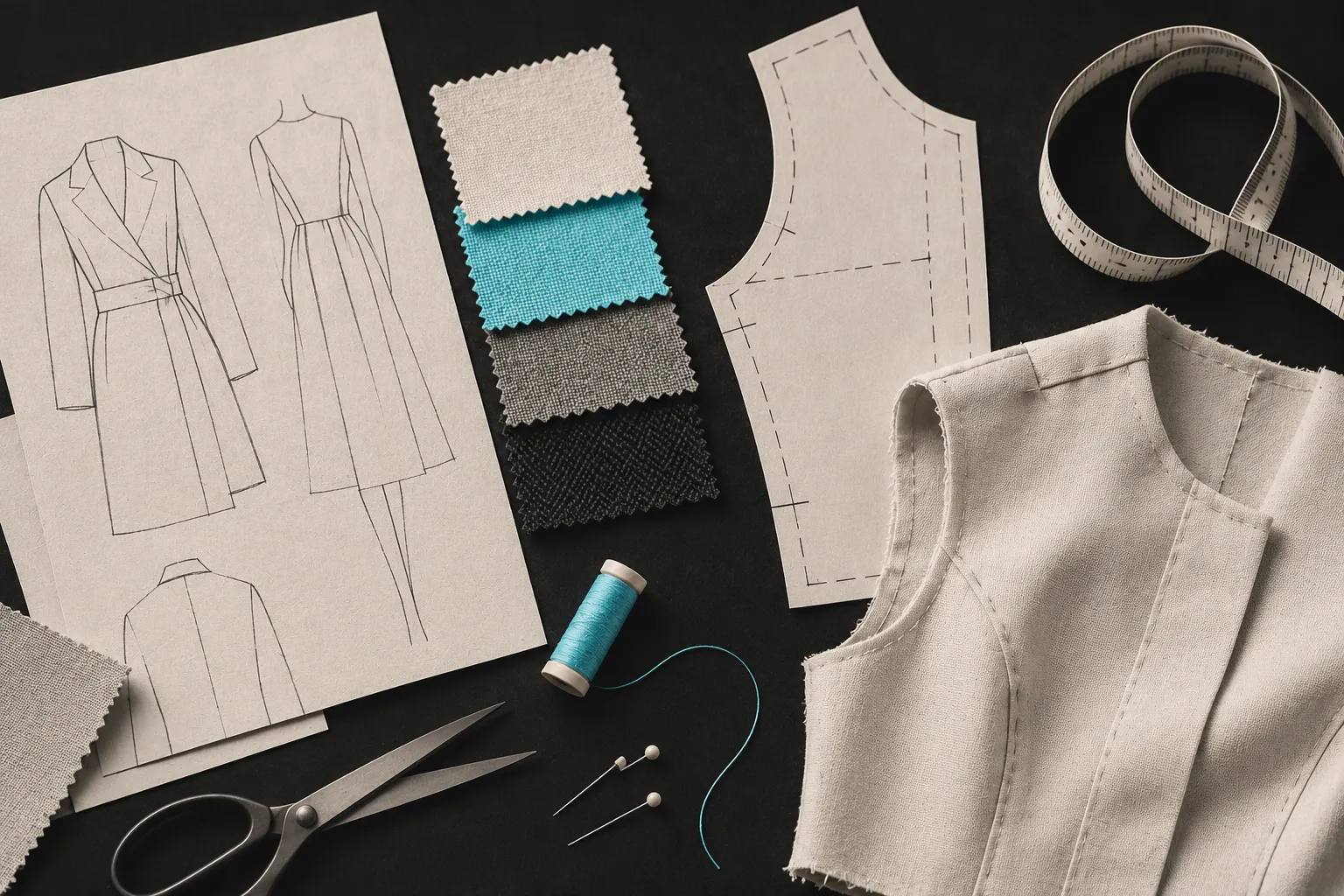
5. Verification: test. Use drawings, prototypes, fit trials, tech packs, bills of materials and costing to check that the solution is feasible and consistent with the initial intention. Verification is not only for establishing whether a garment can be produced: it is to understand whether the finished product keeps the meaning and function that motivated the project.
Mistakes to avoid
Copying instead of interpreting. Reproducing a silhouette or a detail without understanding its context turns research into imitation.
Citing without going deeper. A historical or artistic reference does not become a design direction just because it appears on a moodboard: it has to be explained and linked to a decision.
Confusing nostalgia with relevance. Reviving a code from the past does not mean it still has the same meaning. You need to understand what has changed in the meantime.
Ignoring matter. An idea can be culturally interesting yet not work on the body, in the chosen material or in the production process.
Looking for confirmation instead of verifying. Research should not serve to justify a decision already made: it must be able to challenge it.
Connecting the areas of knowledge
Culture & Research gains value when it dialogues with the other skills of design. The Style Office lets you organize references, archives and visual directions. The Eye develops observation and the ability to recognize details, behavior and change. Method turns intuitions into documented, verifiable steps. Fashion System helps understand the contexts in which fashion develops, is taught and spreads, while Fashion Tech and Fashion Futures let us ask how technologies, materials and production systems could change the possibilities of design.
They are not separate compartments. They are different perspectives on the same process: observe, understand, design, verify.
What this means for those who design today
Cultural research does not guarantee a better product and does not replace technical skill. It can, however, make decisions more conscious.
A reference becomes useful when it lets you ask a precise question about the product, not when it adds images to a presentation.
Culture also influences choices that seem purely technical: the way a garment is worn, its function, the relationship with the body, the value attributed to materials.
Documentation keeps the link between creative intention, development and production. Without this step, part of the initial meaning can be lost in making.
Working hypothesis. In an increasingly fast and distributed fashion system, being able to tell a meaningful reference from a passing trend could become an advantage in defining product directions. And research could have an even more concrete role if it were shared right away with design, patternmaking, materials and production, instead of staying in the initial inspiration phase alone.
The point is not to add culture to the project as an external element. It is to recognize that every product is already born inside a system of meanings, behavior, techniques and relationships. Understanding this lets you design with greater precision and check whether what you meant to communicate is really present in the finished object.