
Art, Architecture and Photography
From composition to construction: how the arts changed the way a garment is designed and represented.
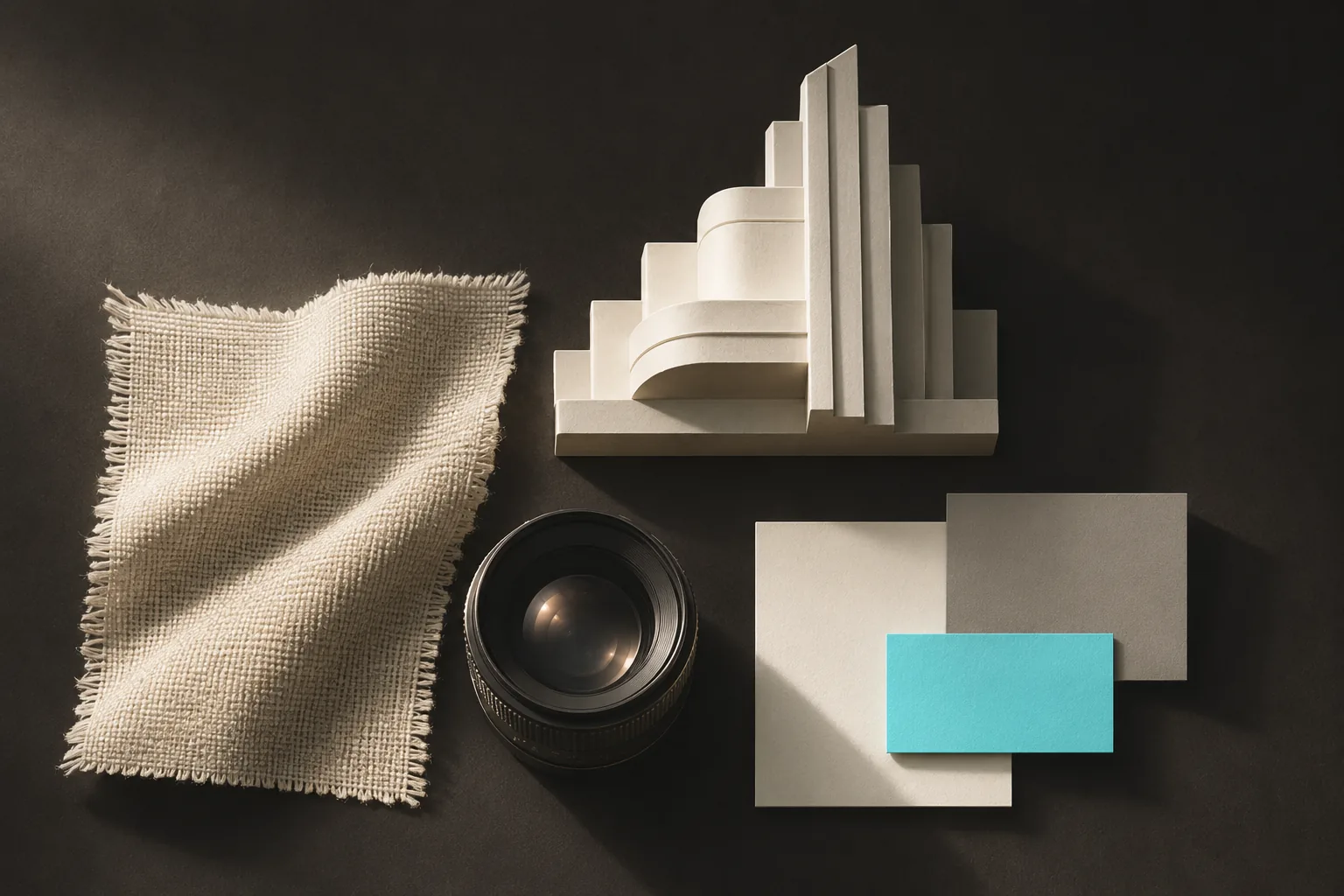
When visual language enters fashion, a reference stops being an image and becomes a decision about the garment.
Fashion design doesn't come from fashion alone
A garment is an object designed through forms, proportions, surfaces, materials and spatial relationships. These elements belong to art, architecture and photography too.
The relationship between these disciplines goes beyond decoration. A painting can suggest a new way to organize surfaces; a building can offer a principle for constructing a volume; a photograph can change how a garment is conceived, because it changes how it will be seen.
The distinction matters. Reproducing an artistic image on fabric means transferring visual content. Interpreting the structure of that image and turning it into a system of cutting, seams and proportions means using a design language.
The history of fashion offers documented examples of both. Other cases show interesting formal affinities, but not necessarily a direct influence. Confusing the two leads to cultural genealogies that the historical sources do not always confirm.
For a designer, the most useful question is not whether a dress resembles a work of art. It is which principle of that discipline can be carried into the construction of a product.
Art and fashion: from surface to construction
Surrealism enters the dress
In the 1930s the relationship between art and fashion becomes especially explicit in the work of Elsa Schiaparelli. The Italian designer, working in Paris, builds a direct dialogue with the Surrealist artists. Among her collaborators are Salvador Dalí and Jean Cocteau.
This is not a matter of stylistic resemblance: drawings, collaborations and garments held in museums document the relationship.
In 1937 Schiaparelli presents, in collaboration with Dalí, the celebrated Lobster Dress, a white evening gown with a lobster painted on the skirt. The motif comes from the artist's imagery and puts a subject foreign to traditional dress decoration at the center of her visual identity.
The collaboration continues with other experiments. The Skeleton Dress, from 1938, uses padded elements that reproduce the structure of human bones. The body is no longer just the support on which fabric falls: it becomes a surface on which to represent an imaginary anatomy.
The collaboration with Jean Cocteau, in 1937, is also documented: the artist makes the drawings, and the house of Lesage turns them into embroidery.
These episodes show a precise design step: an artistic image can become a technique, a relief, a three-dimensional element or a change in how the body is perceived.
Mondrian: when composition becomes a cutting pattern
One of the clearest examples of transfer between art and garment design is Yves Saint Laurent's autumn-winter 1965 collection, presented in Paris in July of that year.
The research takes as its reference the geometric language of Piet Mondrian, and in particular his compositions of black lines, rectangular fields and primary colors. The reference does not stay on the surface of the fabric.
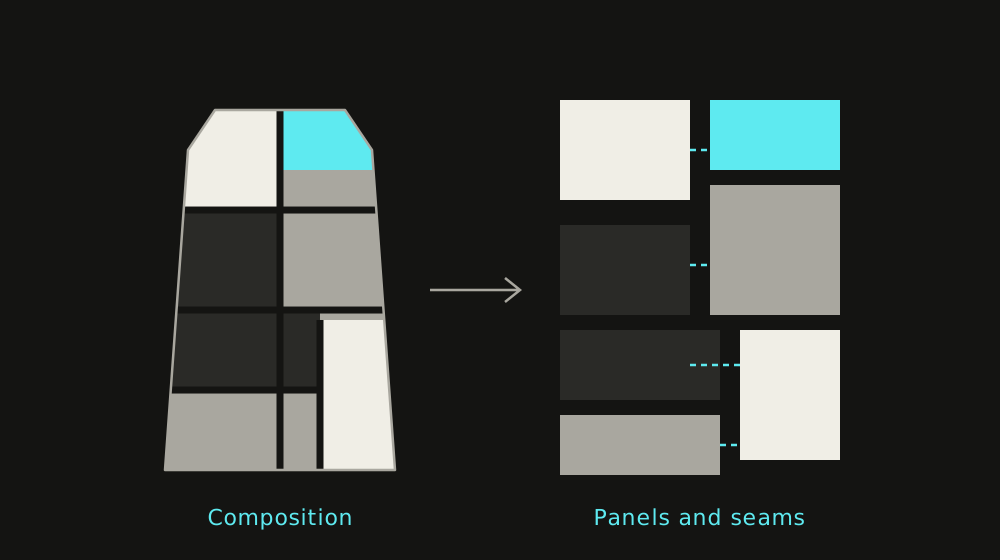
Saint Laurent makes dresses with a simple silhouette, built from panels of colored wool jersey. The black lines dividing the color fields coincide with the system of seams: the geometric drawing also becomes a principle of construction. The seams are arranged to keep the visual continuity of the composition and to hide the shaping needed to fit the dress to the body. A piece from autumn-winter 1965–66 is held in the Costume Institute of the Metropolitan Museum of Art.
The result is not a print inspired by a painting. It is the translation of a two-dimensional system into a three-dimensional construction.
For a designer the lesson is immediate: a composition can become a cutting map. The lines that divide a surface can correspond to panels, joins, stitching or changes of material.
Suggestions are not always proven influences
Not every affinity between art and fashion has the same documentary value. A tiered skirt can recall an Art Deco building. A geometric surface can echo Constructivism. An asymmetrical dress can evoke an abstract composition. These relationships can be useful for research, but they do not prove that the designer studied or cited that specific work.
An interesting case is Madeleine Vionnet. A dress from the house, dated around 1927 and held at the Metropolitan Museum, has a tiered silhouette that curators compare to the stepped forms of Art Deco architecture. It is a curatorial reading of formal resemblance, not proof of a direct derivation from a specific building.
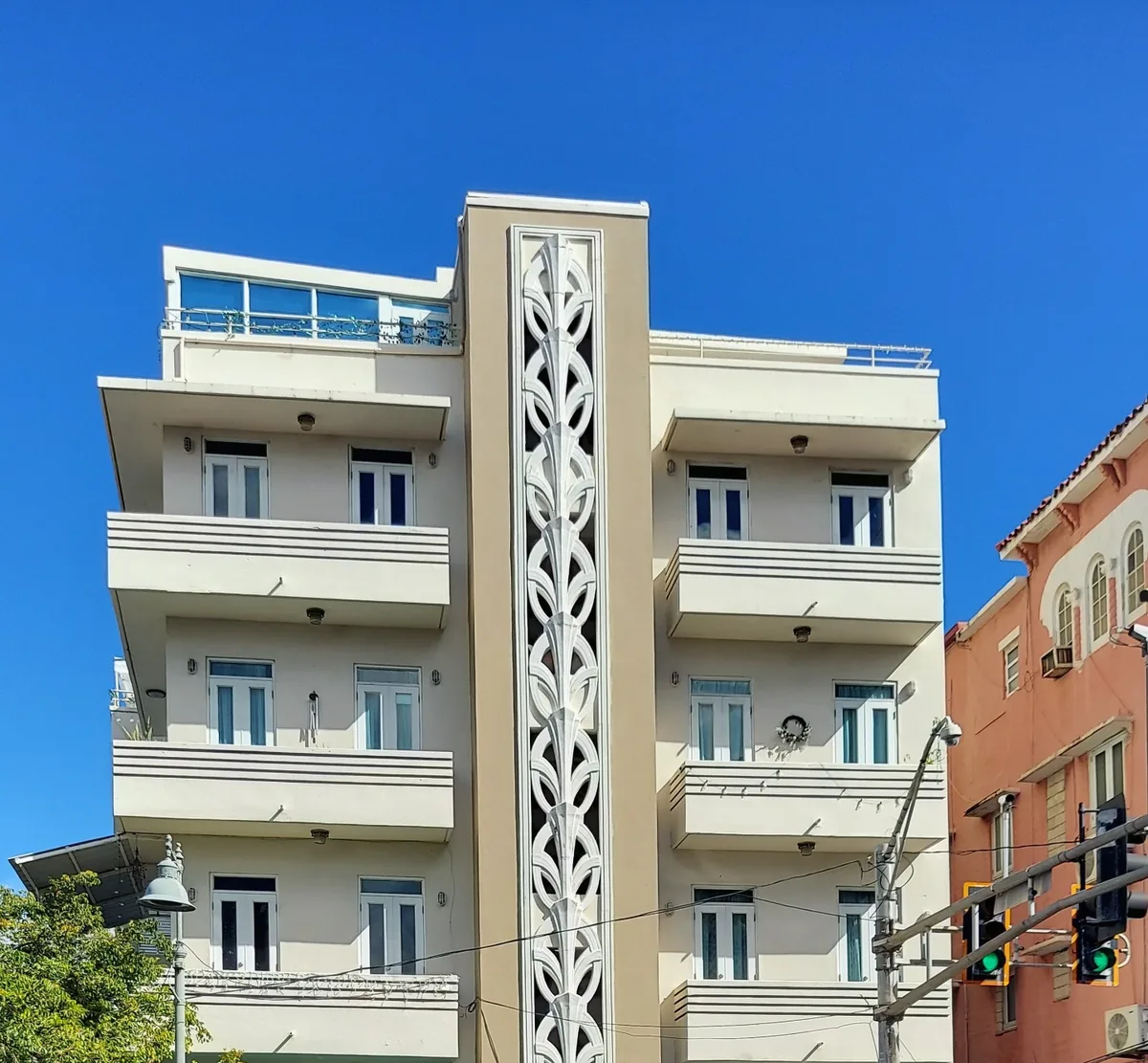
This distinction should accompany every piece of visual research: a declared or documented reference is one thing; a critical interpretation is another; a simple visual analogy is another still. The difference does not reduce the value of research. It makes it more precise.
Architecture and fashion: building around the body
Architecture and fashion share a basic problem: constructing a form that occupies a space.
Architecture works with structures, surfaces, materials, supports and the relationship between inside and outside. Designing a garment faces similar problems, with one added constraint: the structure has to accompany a moving body. The body is not a still structure. It changes position, puts tension on the material and constantly alters the volume of the garment.
Pierre Cardin: form before decoration
Pierre Cardin is a documented link between architectural training and fashion design. Born in Italy in 1922 and moved to France as a child, he studied architecture before turning to fashion.
In the 1960s his research focuses on geometric forms, self-standing volumes and unconventional materials. One example, held at the Metropolitan Museum, is a 1962 dress, a forerunner of the later Car Wash dresses: a multi-tiered skirt, with elements that open and rotate around the body. The museum recognizes in the dress an architectural vision of form and an interest in geometry.
The design point is not only the silhouette. It is how a form is supported, articulated and made dynamic.
Paco Rabanne: the material becomes structure
Another significant line of research is Paco Rabanne's. After studying architecture at the École nationale supérieure des Beaux-Arts in Paris, he turns to experimental fashion based on industrial materials.
In 1966 he presents the collection Twelve Unwearable Dresses in Contemporary Materials, using plastic, metal and other unconventional materials for high fashion. A 1967 dress held at the Metropolitan Museum is made of square and rectangular aluminum plates joined by metal rings.
Here fabric is no longer necessarily the main structure: the garment is built from rigid elements connected to one another. The questions to solve are those of a structural project: weight distribution, connection points, articulation, movement and the relationship between rigidity and flexibility. The material determines the method of construction.
Volume as inhabitable space
The dialogue between architecture and fashion is not only about materials. It is also about the relationship between surface and body.
The exhibition Skin + Bones: Parallel Practices in Fashion and Architecture, organized by the Museum of Contemporary Art in Los Angeles from November 19, 2006 to March 5, 2007, explored exactly these relationships. It brought together forty-six designers and architects, addressing themes such as architectural geometry, enveloping surfaces, structure and the relationship between body and space.
Among the examples were Frank Gehry's Walt Disney Concert Hall, developed between 1987 and 2003, and Rei Kawakubo's spring-summer 1997 collection, Body Meets Dress, Dress Meets Body.
The two works should not be seen as a collaboration or a direct derivation. The exhibition placed them side by side to show a parallel inquiry into forms that wrap around and transform the perception of space. It is an important distinction in contemporary work too: different disciplines can tackle the same problem without necessarily influencing each other.
Architecture thus gives fashion tools for thinking about volumes, tensions, surfaces and structure. Fashion, in turn, introduces a variable the building does not have: the continuous movement of the person wearing the object.
Photography: the garment changes when the way of showing it changes
Photography has had a particular influence on fashion because it changed the relationship between product, body and public.
Before photography spread through magazines, clothing was represented mostly through illustrations and fashion plates. Photography introduces a different relationship with the body: it shows a real material, a fit, a surface and a visual situation. It is no longer only a representation of the design. It becomes the means by which the public learns to desire, interpret and recognize a garment.
Edward Steichen: the shift to editorial photography
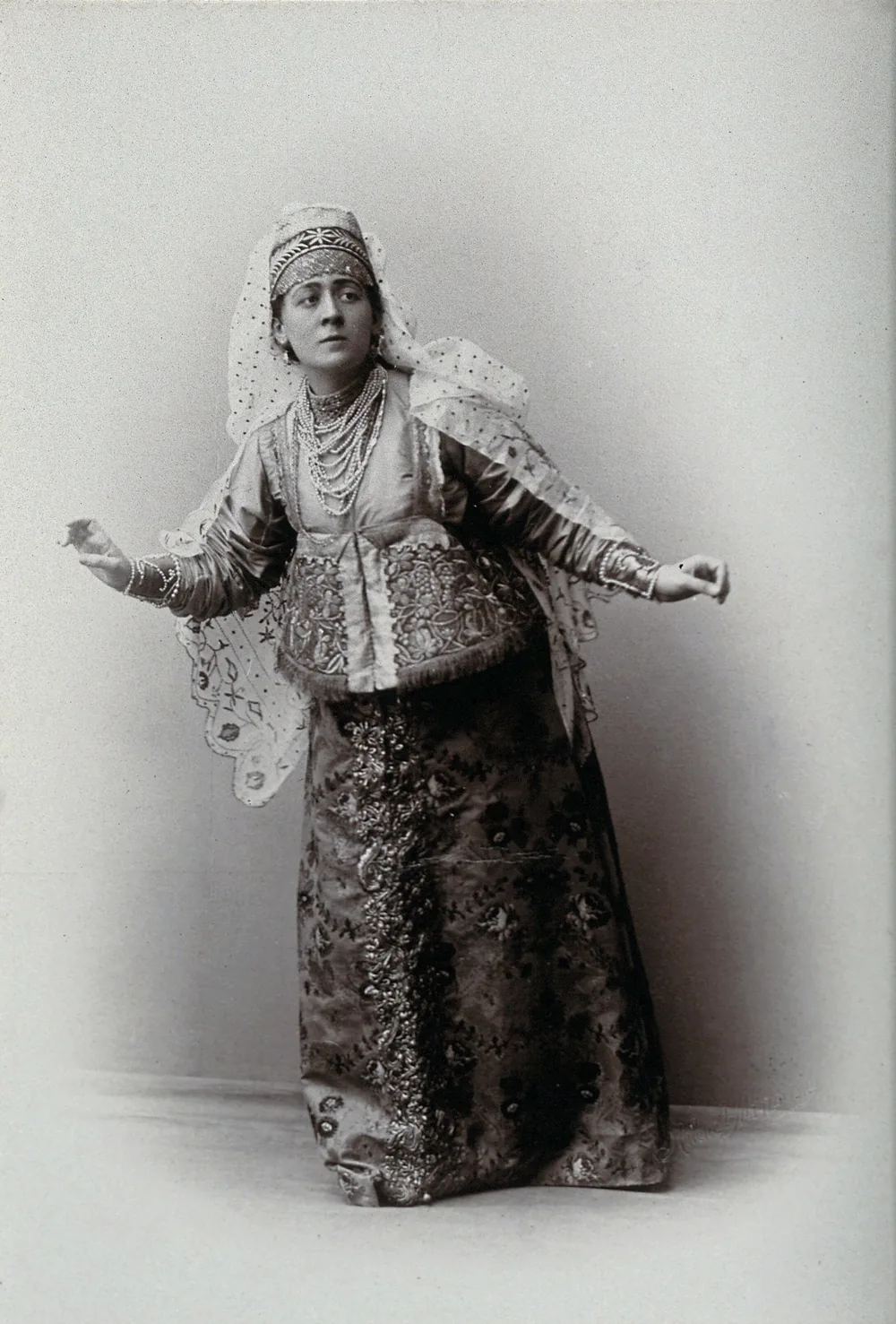
In 1911 Edward Steichen photographs Paul Poiret's dresses in Paris for the magazine Art et Décoration, images considered among the first important examples of modern fashion photography. The photograph does not just record a dress: it uses light, pose, setting and composition to build a representation of the product.
In 1909 Condé Nast had acquired Vogue, gradually turning it into a leading fashion publication. The growth of magazines and better printing techniques help spread photography as an editorial language.
The shift matters for design too: the garment is more and more often conceived to be seen in a photograph, not only in person.
Man Ray and Surrealism: to photograph is to interpret
In the 1920s and 1930s fashion photography begins to experiment with autonomous languages. Man Ray, who moved to Paris in 1921, develops the rayographs, images made without a traditional camera.
His Surrealist research also influences the visual language of magazines: images become less descriptive and more experimental, and shadows, overlaps, reflections and unexpected associations change how objects are perceived. Surrealist works and avant-garde photographs by Man Ray appear in fashion magazines of the 1920s and 1930s.
The consequence is significant: the photographer does not have to show the garment neutrally. They can build an atmosphere, alter perceived proportions and give the product a cultural meaning.
Irving Penn: control of form
In the postwar period Irving Penn develops a language of essential compositions, controlled backdrops and close attention to the figure. His work for Vogue, which runs for about sixty years from the 1940s, helps define the image of fashion in the 1940s and 1950s.
Penn often strips away distracting elements and focuses on posture, silhouette and the relationship between dress and body. Photography becomes a form of visual analysis: the volume of a garment emerges from the way light describes the surfaces and separates the parts of the figure.
Richard Avedon and David Bailey: the body enters the scene
In the 1950s Richard Avedon brings to fashion photography a more dynamic relationship between model, dress and setting. One example is Carmen (Homage to Munkacsi), taken in Paris in 1957 and published in Harper's Bazaar that September: a model in motion, wearing a Cardin coat, in Place François-Premier. The garment is not presented as an isolated object: the person's movement and the relationship with the space help read the silhouette.
In the 1960s David Bailey develops a documentary, more spontaneous approach. His work with Jean Shrimpton for Vogue, including the shoot made in New York in 1962, helps define a new image of youthful fashion. The pose becomes less rigid. The body portrayed looks closer to everyday life, to the street and to the behavior of a generation.
Photography no longer just shows how a dress falls. It tells who might wear it, where and in what situation.
Helmut Newton: photography as an autonomous language
In the 1970s and 1980s Helmut Newton develops a fashion photography of theatrical compositions, urban settings and an explicit relationship between fashion, body and the representation of sexuality. His work helps make fashion photography a recognizable language even outside its commercial function.
At this point photography is no longer only the medium through which a collection is communicated. It becomes a discipline with its own visual grammar, able to influence how the body is interpreted and, indirectly, how clothes are designed.
Light, framing and garment design
Photography has also changed how a designer can evaluate a product. A garment seen in person and a photographed one do not necessarily give the same information.
In person you perceive weight, texture, movement, temperature and how the fabric behaves. In a photograph, by contrast, some features become dominant: the contrast between surfaces, the definition of volume, the position of the seams and the relationship between silhouette and background.
Three elements are particularly important.
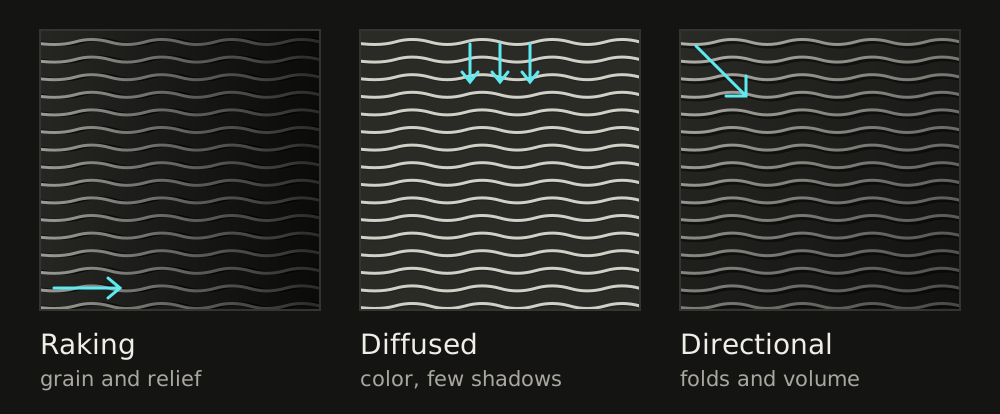
Light determines how matter is perceived. Raking light brings out grain, folds, relief and irregularities. Diffuse light reduces shadows and makes the surface more uniform. Side light can visually separate two materials similar in color but different in structure.
Framing decides what information is shown. A frontal photograph lets you read proportions and symmetries; a side view makes depth more evident; a close-up can isolate a seam or a finish, but does not necessarily tell how the garment behaves as a whole.
The body portrayed changes the meaning of the product. The still body of the classic studio, the dynamic one of Avedon and the one set in an urban situation in Bailey's images produce different readings of the same garment.
This change affects design too. If the product has to be shown in motion, fit and material behavior become central. If instead the image has to describe a construction, the position of the body and the light must make the details readable.
Photography thus becomes a tool of verification, not just of communication.
What a designer can learn from other visual languages
Looking at art, architecture and photography productively means turning images into design questions. You don't need to know the whole history of an art movement. It is more useful to learn to spot the principles that organize a composition.
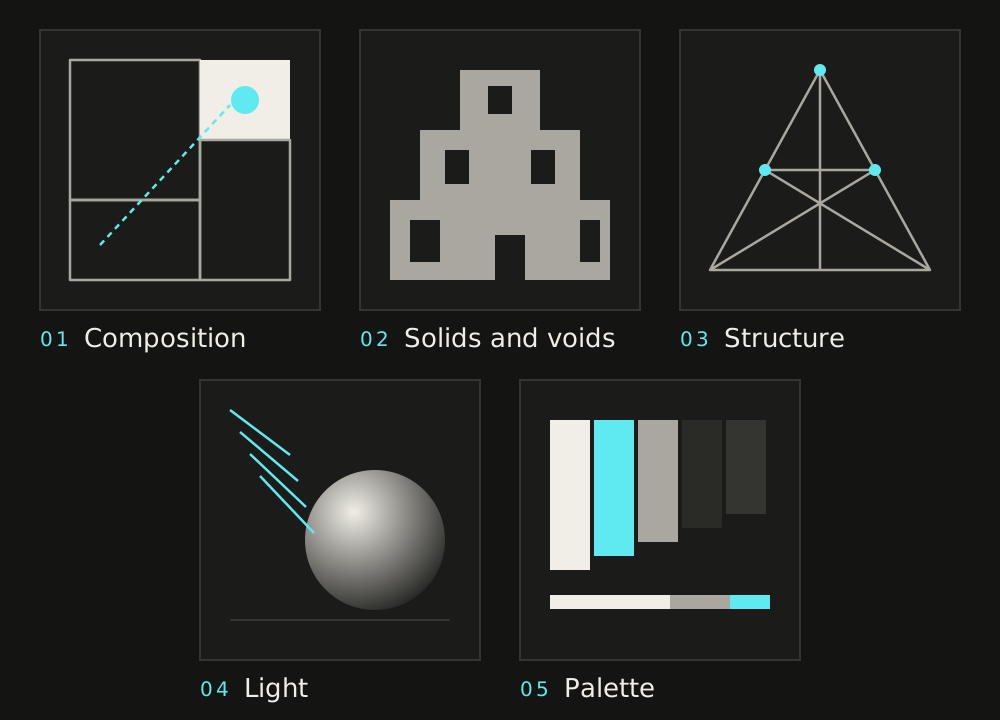
Read a composition. In a painting, identify the focal point, the direction of the lines and the distribution of colors. Carry these relationships into the garment through panels, seams, material contrasts and proportions.
Study solids and voids. In architecture, observe how a structure alternates closed surfaces, openings and transition spaces. In a garment, apply the same reasoning to overlaps, openings, transparencies, volumes and exposed areas.
Analyze a structure. Don't stop at the outer silhouette. Understand which elements support the volume, where tensions concentrate and how the parts connect. It is a reading that can translate directly into pattern, construction and choice of seams.
Study light. Observe how a photographer describes a material. A matte, a glossy and a transparent surface react differently to the same lighting. Photography helps you understand which features of a material are really perceivable.
Extract a palette. Don't just copy an artwork's colors. Identify the dominant color, the accent, the relationship between warm and cool tones and the relative quantity of the colored surfaces. The same palette can give very different results if the proportions change.
A useful exercise is to choose a work and prepare three separate analyses: one of composition, one of structure and one of material. Only afterward do you move to translating it into a garment. This way research doesn't become a collection of images to imitate, but a tool for making decisions.
What it means for those who design today
The relationship between fashion, art, architecture and photography suggests a way of working that starts from observation and ends in construction.
For a fashion designer, it means widening the sources of research without turning every reference into a literal quotation.
For a product designer, it means recognizing that form does not depend only on the outer drawing, but on materials, geometries, connection points, fabric behavior and the relationship with the body.
For a product manager, it means considering these choices from the earliest stages of development. A very geometric construction, for example, may require specific panels, processes and symmetry checks. A structure made of rigid elements poses different problems from a garment in fluid fabrics.
Visual research therefore has to be tied to feasibility. An artistic reference can suggest a palette, but you have to check how to achieve it with the materials and processes available. An architectural form can suggest a volume, but you need to understand how to support it without compromising fit and movement. A photograph can show an interesting silhouette, but the result has to be verified on the real garment, not only on the image.
There is a last aspect: the relationship between design and representation. Today the product is seen through detail images, editorial photographs, technical photographs and digital representations. Each format brings out different information. The design must be solid enough to keep its identity under all these conditions.
Art, architecture and photography are therefore not outside references to add at the end of the creative process. They are three tools for reading and organizing the project: the first helps understand composition, the second construction, the third perception.
Their value emerges when a visual reference stops being just an interesting image and becomes a concrete decision about the garment.